Where Memory Becomes Stronger Than War — the Story of Adela and Miroslav Milekić
History does not live only in archives or old books. It lives in families, in photographs, in short handwritten sentences once written behind barbed wire. The story of Adela Milekić, née Frauenhofer, and her husband Miroslav tells much about the 20th century, about Serbia, Europe, and the fate of countless families — and leads to Oflag VI C Osnabrück, where Miroslav's grandfather Miloje Milekić was killed on 2 March 1945.
History does not live only in archives or old books. It lives in families. In photographs. In faded documents. In short handwritten sentences once written behind barbed wire that still touch people decades later. The story of Adela MILEKIĆ, née FRAUENHOFER, and her husband Miroslav tells much about the 20th century, about Serbia, Europe, and the fate of countless families.
Adela, born FRAUENHOFER, comes from a Danube Swabian family from Banatsko Veliko Selo in the Banat region. Her family history represents many families from Vojvodina whose lives were shaped by war, displacement, and political upheaval. After 1945, part of her relatives emigrated to Germany, while her parents and grandparents remained in former Yugoslavia and tried to build a new life under difficult circumstances. Today, Adela and Miroslav live in the Bačka region, in the town of Srbobran. Both look back on a life marked by history and remain deeply connected to their family roots. They have two daughters and four grandchildren living in Novi Sad. Especially moving is the fact that the younger generations also know the story of their family and understand the importance of memory, heritage, and family roots.
Miroslav also carries an extraordinary family history. The Milekić family belongs to old Serbian families whose origins, according to tradition, trace back to Old Herzegovina. Through Piva and the region of Tomino Polje, part of the family later settled in the areas around Tara and Mokra Gora. For generations, the Milekić family was connected with agriculture, livestock breeding, military service, and public life in their homeland. A special role was played by Miloje Milekić, one of the early Serbian aircraft mechanics during the First World War. At a time when the Serbian army closely cooperated with the French allies, he belonged to a generation of technical pioneers who not only maintained aircraft but also mediated between different military structures.
Yet the most moving chapter of the family history leads to Osnabrück. Miroslav's grandfather was a royal Yugoslav officer who was captured in 1941 after the German invasion of Yugoslavia. He was taken to Oflag VI C Osnabrück — one of the most important German prisoner-of-war camps for Yugoslav officers. There began years of life behind barbed wire. The officers lived in simple wooden barracks. They slept on bunk beds with straw mattresses and spent their days between roll calls, short walks inside the fenced camp, and constant uncertainty about whether they would ever see their families again. Food consisted mainly of thin soups, black bread, and a few potatoes. For many prisoners, parcels from their families and the Red Cross became essential for survival.
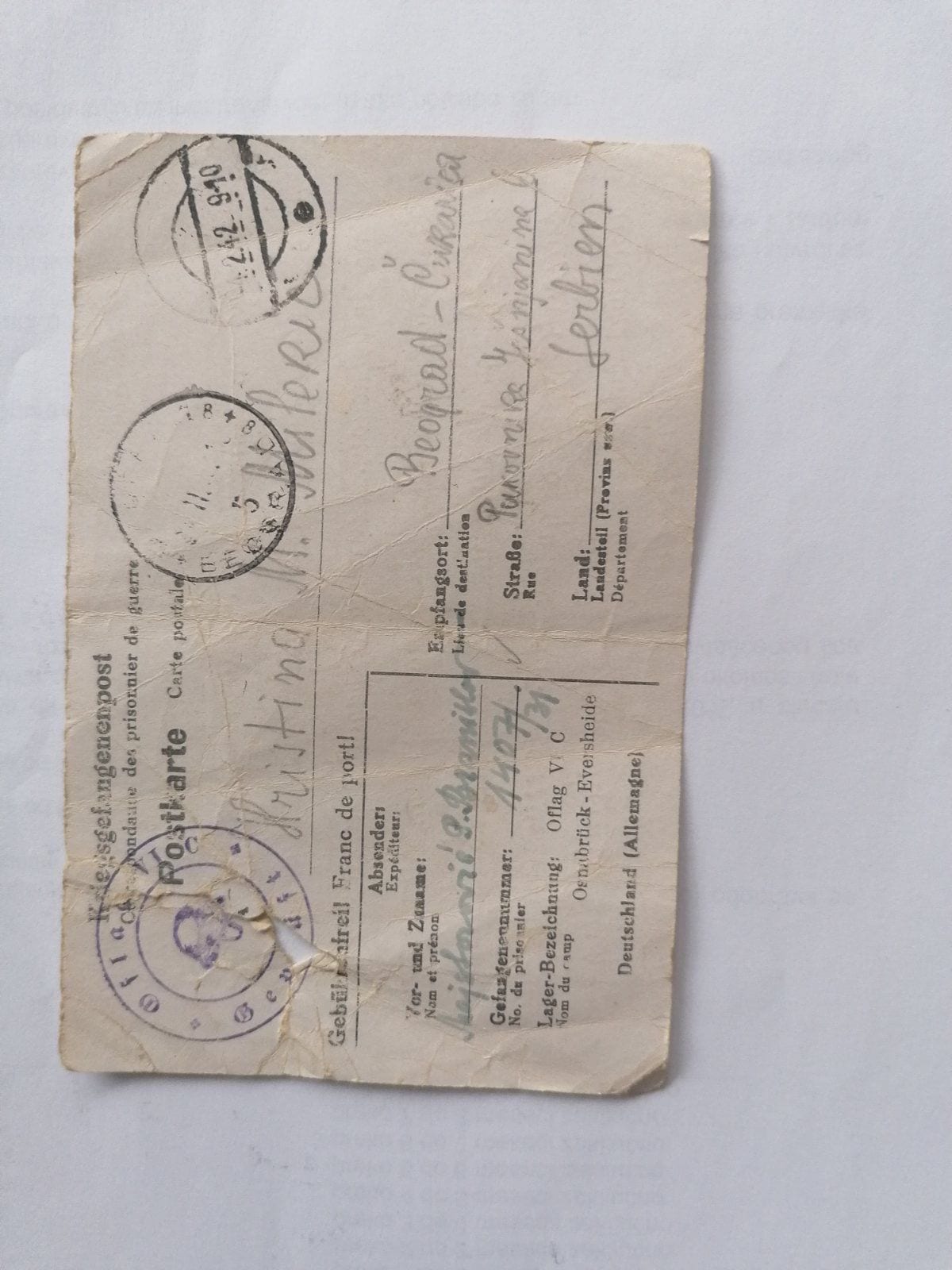
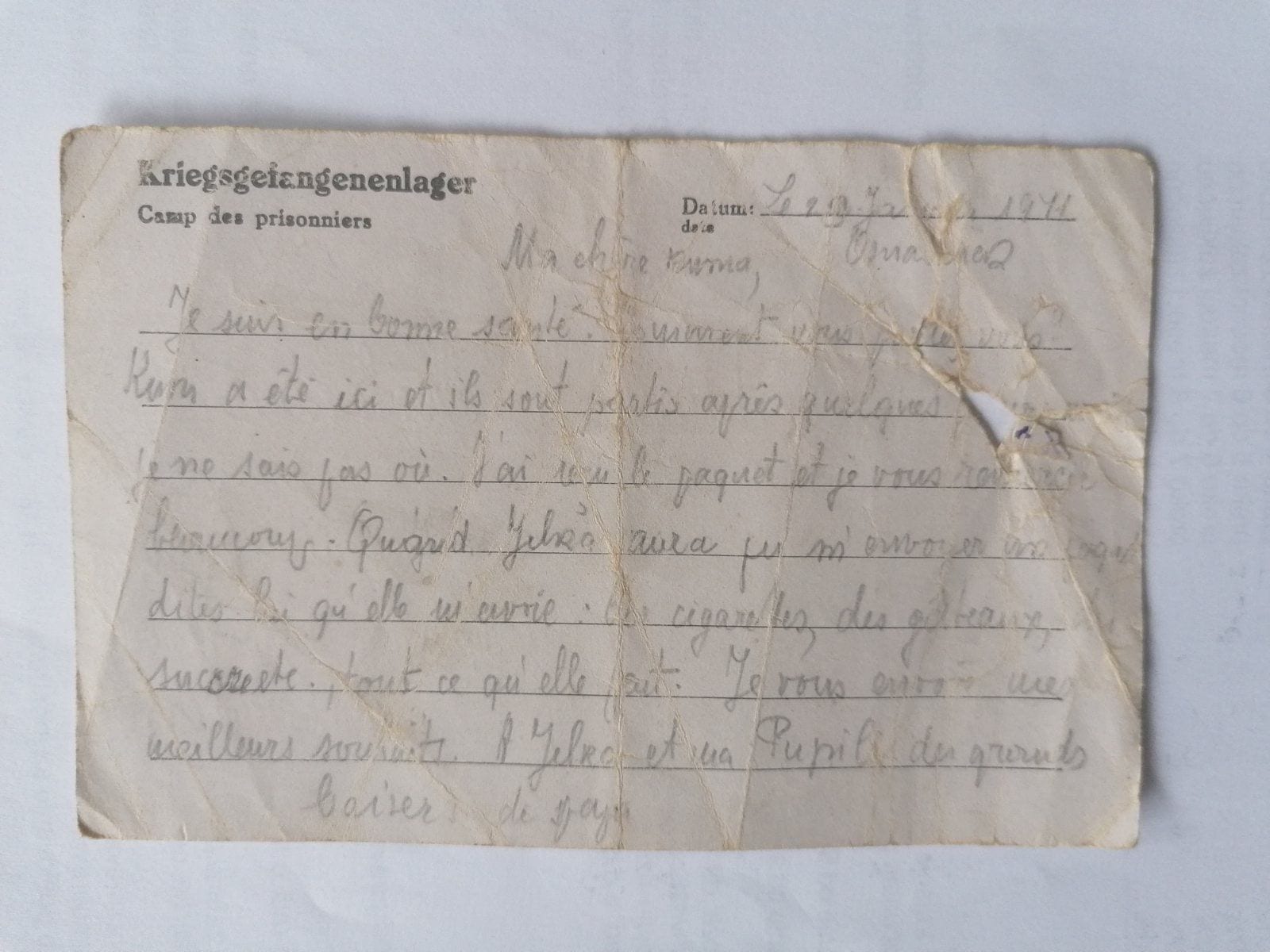
Especially moving is a preserved field postcard from Oflag VI C dated July 12, 1941. In just a few lines, the grandfather wrote to his mother in French: "Ma chère Maman, Je suis en bonne santé…" "My dear Mother, I am in good health…" These words seem simple. Yet precisely in their simplicity lies their power. All letters and postcards were strictly censored. Prisoners were not allowed to describe the real conditions in the camp. That is why so many messages repeated the same reassuring phrase: "I am well." Behind these words hid fear, hunger, loneliness, and the hope of not being forgotten.
The postcard also tells a European family story. Miroslav's grandfather was married to Kristina, a Belgian woman from the French-speaking Walloon community. The family was strongly shaped by French language and culture. Despite war, loss, and the difficult postwar years, Kristina remained with her children in Yugoslavia, in Serbia. There she rebuilt her life and remained until her death in Novi Sad in 1956. Her son grew up speaking French as his mother tongue and carried this Belgian-French cultural heritage throughout his life. Inside the camp, many officers tried to preserve their dignity. They organized lectures on history, mathematics, and languages, founded small libraries, played chess, wrote poetry, and kept diaries. It was a silent struggle against despair and forgetting.
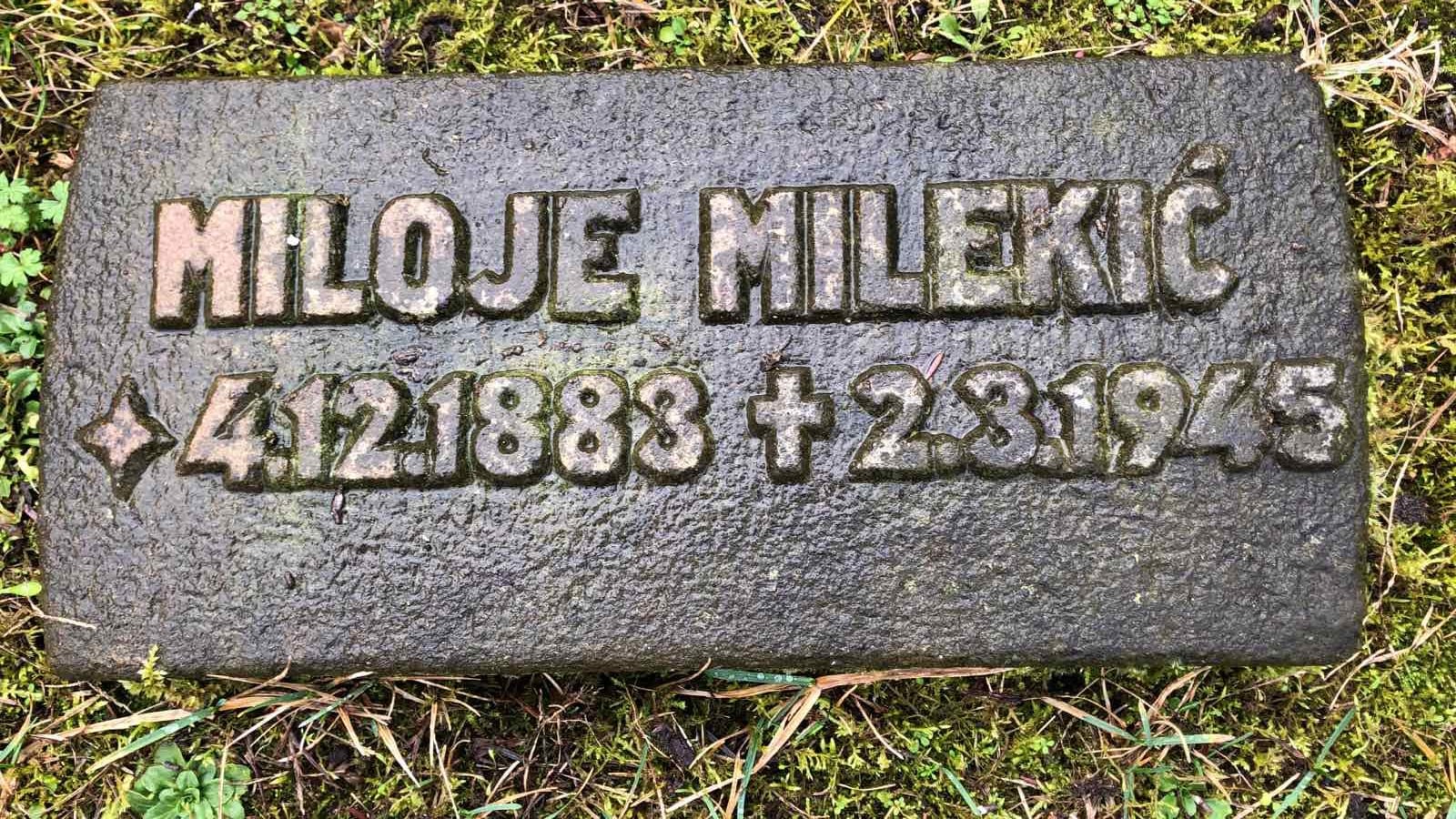
But not all returned home. Miroslav's grandfather was murdered on March 2, 1945, and buried at the Eversburg cemetery in Osnabrück. His grave still reminds visitors of the fate of those men who died far away from their homeland, while their families continued living for decades with memories, photographs, and a few surviving letters.
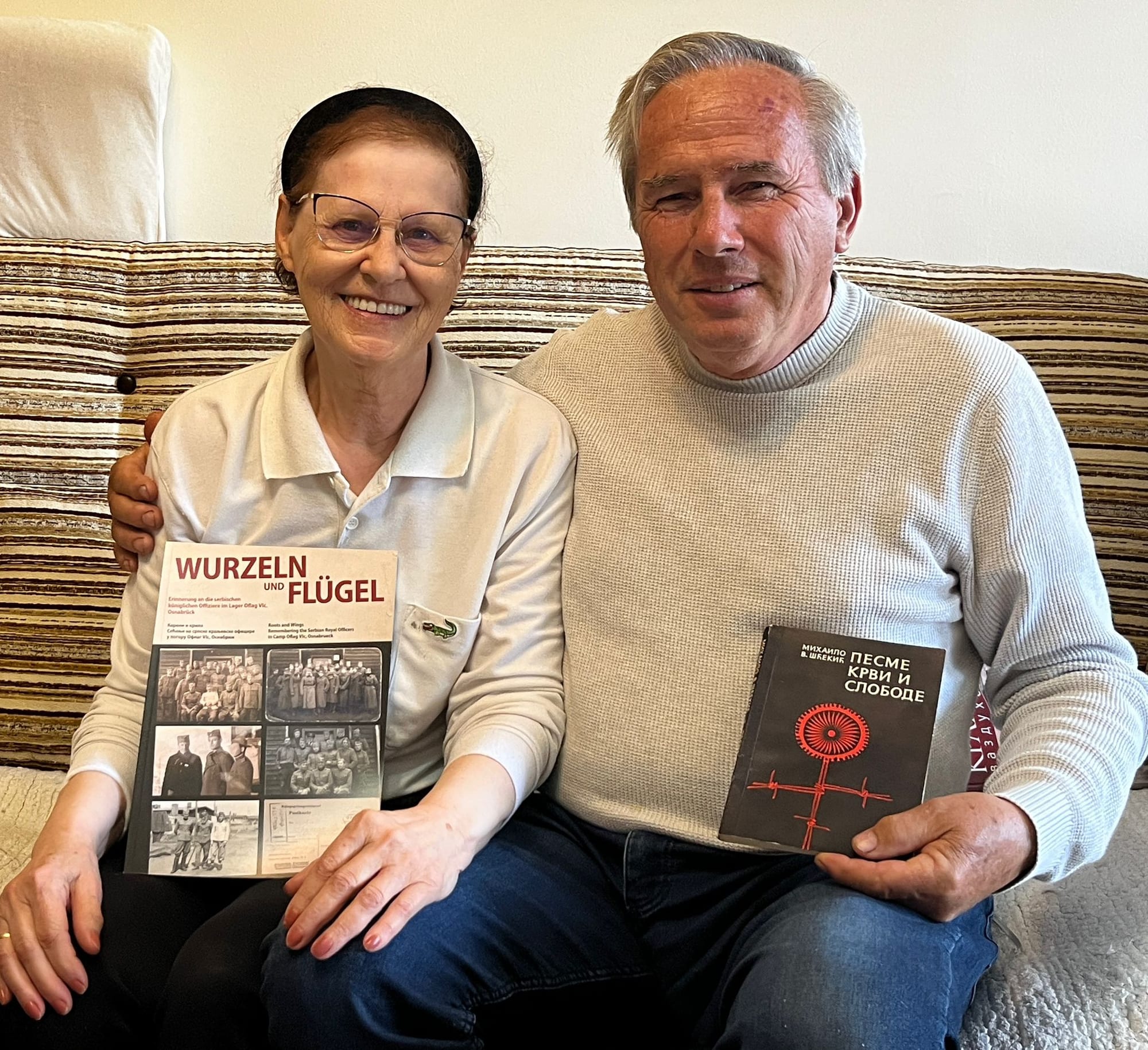
Adela and Miroslav later met while studying in Belgrade. Their story reflects in a special way what Serbia and Europe represented over generations: the coexistence of different cultures, languages, and identities. Within one single family, Serbian, Danube Swabian-German, Belgian, and French-speaking roots are united. Such life stories remind us that Europe is not only made of borders and states, but above all of people, encounters, and shared memories. It is also deeply moving that Miroslav holds in his hands the book "Pesme krvi i slobode" (Songs of Blood and Freedom) by Mihailo V. Škekić — himself a former prisoner of war and officer from Osnabrück. This rare book was sent by his granddaughter Ljubica Avejić from Belgrade. Adela holds the book "Roots and Wings", which tells the stories of former prisoners of war and their families today.
Such encounters make clear why this research work matters. Not because of numbers, archives, or statistics. But because behind every story stand people. Families. Memories. Hope. This chapter seeks to give a voice to the families of former prisoners of war from Osnabrück — so that their stories will not be forgotten and future generations may understand the importance of humanity, remembrance, and mutual respect. And perhaps that is the most important message of all: that history does not have to divide people, but can connect them — across generations, countries, and languages.
#Roots and Wings #Oflag VI C #family stories