Slobodan Dumanović — My Two Fathers
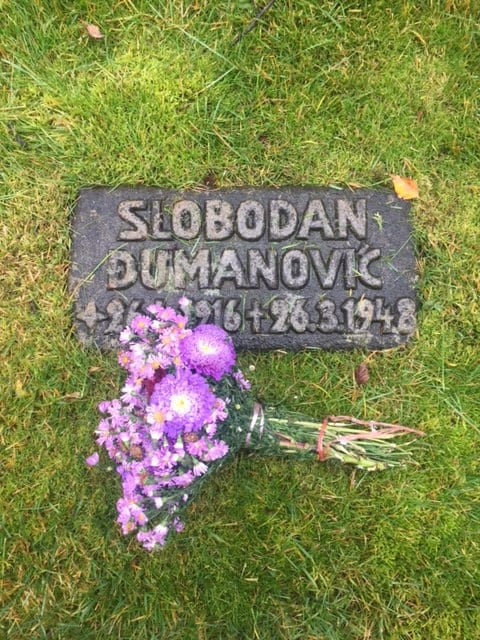
Slobodan Dumanović, a pilot of the Royal Yugoslav Air Force, was a prisoner of war in Oflag VI C in Osnabrück from 1941 to 1945. He was born on April 26, 1916, in Stanišinci near Trstenik and died on March 26, 1948, in Germany. Among the 105 gravestones at the Eversburg cemetery stands his own. His daughter, the journalist Anna Tomforde, tells the story of her two fathers.
Slobodan Dumanović, a pilot of the Royal Yugoslav Air Force, was a prisoner of war in Oflag VI C in Osnabrück from 1941 to 1945. He was born on April 26, 1916, in Stanišinci near Trstenik and died on March 26, 1948, in Germany. Among the 105 gravestones at the Eversburg cemetery stands his own. His daughter Anna tells the story:
"Human destinies and stories that emerge from conflict and destruction can be both a warning and a source of hope. The Second World War disrupted the lives of millions of people across Europe more profoundly than any previous war and caused immeasurable suffering. Pain, death, and the loss of loved ones dominate our understanding of those destructive events. Yet moments of human happiness also occurred. On the cold winter day of my birth, November 10, 1946, during the hardships of the post-war years, there was probably little cause for celebration. It was said that my mother, Gesine, shed tears that week — whether from joy or sorrow, I will never know. Her reaction was understandable, for she had not seen the father of her baby for months: the Serbian Air Force officer Slobodan Dumanović, who probably did not even know that I had been born. Her German husband, Friedrich, to whom she had been married since 1937 and with whom she had two sons aged six and three, was being held in British captivity after serving in the German Navy. From my parents' correspondence, it is clear that Gesine was desperately trying to find out where her husband was and when he would return. It seemed she had something very important to tell him.
I must also assume that Slobodan knew neither about my mother's pregnancy nor about my existence. After the war, he arrived in northern Germany with the British Army and was stationed in our apartment in the small village of Bützfleth near Stade from February 1946 onward. In July, after a brief but, according to my mother, deeply emotional romance, he was transferred elsewhere. While my German father immediately accepted me as his own child, I have had to come to terms with the fact that Slobodan never knew I existed. According to British Army records, he died in 1948 following an operation at the age of only 31. Other sources cite tuberculosis as the cause of death. Unverified accounts mention a motorcycle accident. His gravestone bears the number 15 among the 105 Yugoslav officers buried at Eversburg Cemetery in Osnabrück. From an early age, the story of my 'two fathers' occupied my thoughts. For my mother and for her husband, who was a respected local savings bank director, the difficult post-war years were far from easy. I sensed tensions between my parents, within the family, at school, and throughout the village community. As I grew older, I increasingly felt different — both outwardly and inwardly. I knew there were questions for which I had no answers.
Once, a married couple came to visit. When they saw me, they exclaimed: 'She looks completely different from you!' I blushed and was unsettled. My parents remained silent. When I was about seven years old, playing in the street with other children, a woman passing by on a bicycle called out: 'You are not allowed to play with her — her father is a Slav.' I wondered what that meant and what she was trying to say. I did well at school, and life went on. My relationship with my older brother was good, though never particularly close. My other brother had died at the age of eight. Although love and a good relationship connected me with my father Friedrich, his family made it clear to me that, with my brown eyes and dark curls, I did not fully belong to them. They despised my mother and often called her a 'whore' or a 'traitor'. When I was about 18, I asked my mother about my different appearance. She never mentioned her relationship with Slobodan. Only on her deathbed did she confess to me that she had loved him. In answer to my questions, she simply pressed a slip of paper into my hand bearing the name 'Dumanović'.
In the meantime, after a stay in England and language studies, my professional career had begun. I met people who were fascinated by my story rather than depressed by it. Through contacts with British diplomats and the British Army in Germany, I managed, by the end of the 1970s, to find out more about Slobodan. As an officer loyal to the king, he had remained in Germany and found his final rest in Osnabrück. Now I wanted to find his family in former Yugoslavia. I was very lucky. Through my work I met the journalist Aleksandar Lebl, who had worked for a time for the Financial Times in Belgrade. With the help of the telephone directory he found a trace of the Dumanović family. After lengthy research he came upon the eldest of three brothers, Miloš Dumanović, who lived near Aleksandrovac, about 150 kilometres south of Belgrade. He had three wonderful daughters — my cousins — whom I met during my journey in September 1978. They were all about my age and highly educated, from a fashion designer to an engineer. On Miloš's farm we joyfully celebrated our long-awaited reunion. For Miloš, his wife and his daughters, I was the link to their 'lost' brother and uncle Slobodan. Our contacts continue to this day.
From them I learned that Slobodan had three brothers and a sister. I also learned that his brother Zvezdan had been interned together with him in Oflag VI C as a reserve officer. Zvezdan returned to Yugoslavia, but died of tuberculosis in 1947. I also learned that after the war the brothers often argued about whether it was sensible and safe to return to Tito's Yugoslavia. According to Zvezdan, Slobodan remained undecided until the very end. The family told me that Slobodan never wanted to become anything other than a military pilot. After four years of primary school and four years of grammar school, his father sent him, at the age of 15, to the Royal Military Academy in Belgrade. After five years he graduated as a lieutenant of the air force, shortly before the outbreak of the war. Soon afterwards he was taken prisoner and came to Osnabrück via Nuremberg and Hammelburg. Having remained in Germany after the war, Slobodan became an officer of the British Army — and met my mother. And so the story of my 'two fathers', of that I am certain, found its happy ending."
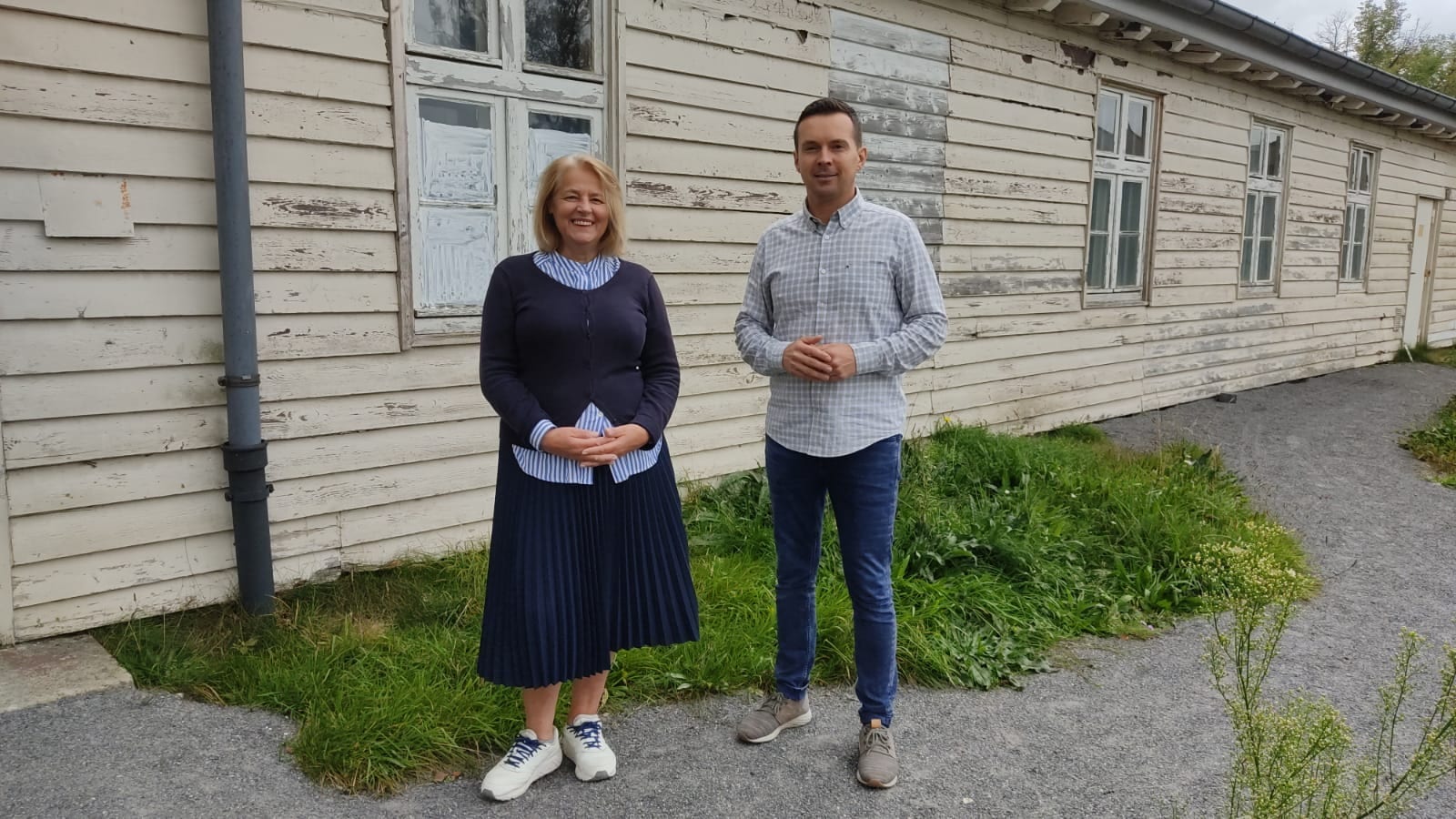
So testifies the daughter of the Yugoslav officer, who today bears her husband's name: Anna Tomforde. Anna Tomforde was born in 1946 in Germany. She is married to an Englishman and lives in London today. She has a daughter who, like her parents, became a journalist. Anna began her career in 1970 at the news agency Reuters; later she worked for the BBC and as a correspondent for The Guardian. She completed her studies in London at the age of 20 and went on to work as a correspondent for the German press agency dpa (Deutsche Presse-Agentur). Recorded by Dr. Željko Dragić, Osnabrück, August 2021.
#Oflag VI C #Eversburg #testimonies #family stories