Between Camps and German Villages – The Fate of Yugoslav Royal Officers
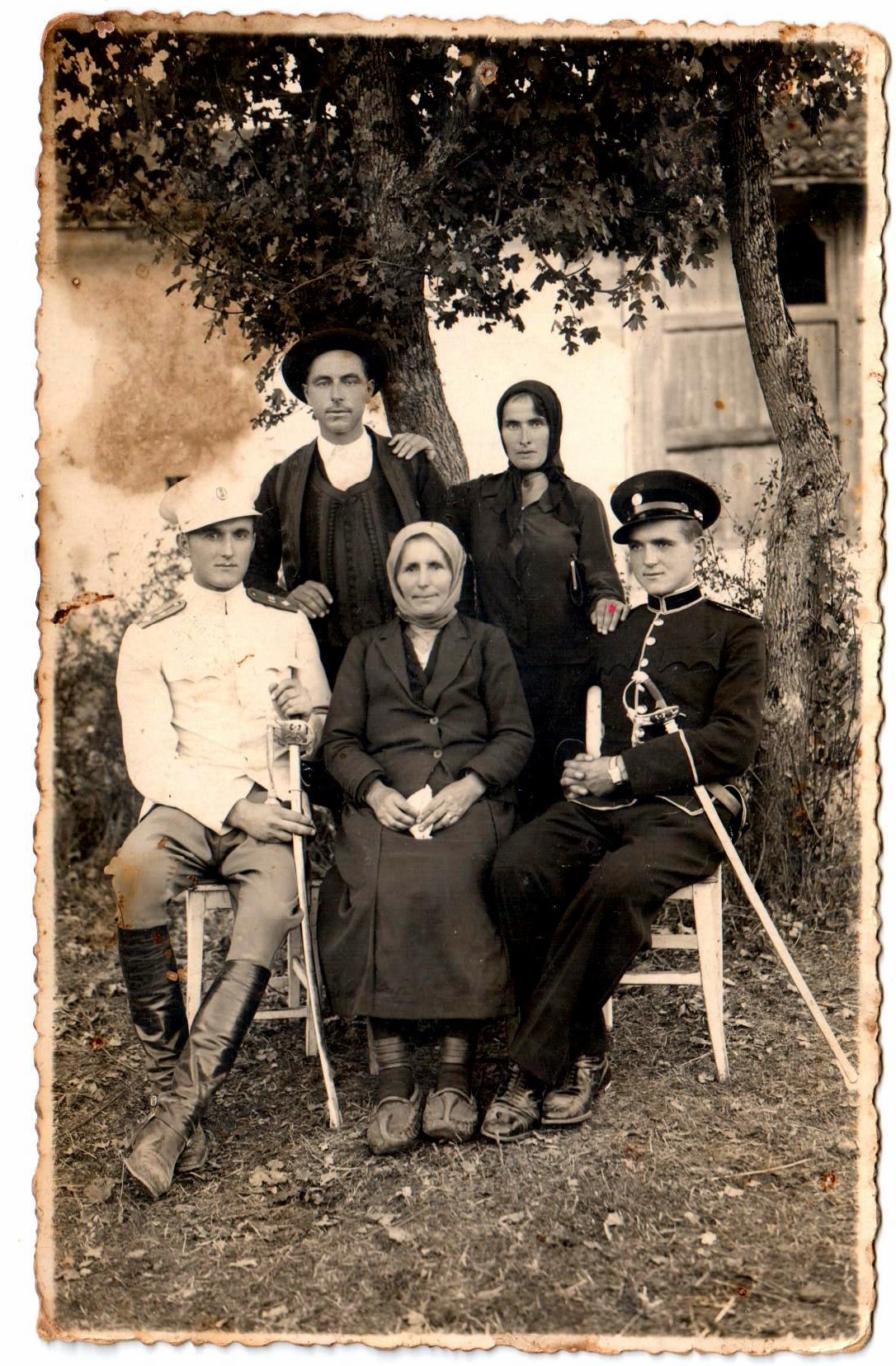
On the family photograph of the Serbian Muzikravić family from 1938, we see standing Radonja Muzikravić, the eldest son, together with his wife Milka. Seated are Blagomir Muzikravić (1912–1998), Mileva Muzikravić, and Marko Muzikravić (1914–1945). Blagomir Muzikravić later served as a royal Yugoslav officer and was held in German captivity at Oflag VI C in Osnabrück during the Second World War.
When I published the first edition of my book The Miracle of Osnabrück in June 2021, I could not have imagined how deeply the stories of Yugoslav royal officers imprisoned in Germany during the Second World War would resonate. Within only a few weeks, letters, photographs, family documents, and testimonies from descendants in Serbia, Germany, the United States, Canada, and Israel began to arrive. Precisely because of this great interest and the many newly discovered facts, a significantly expanded second edition of the book was published in December of the same year.
At that moment I realized something that I still feel today whenever I speak with descendants of former prisoners of war: behind every number stands a human being. Someone’s son. Someone’s brother. Someone’s husband. Someone’s father. That is why this is not only a story about war. It is a story about human destinies.
After the capitulation of the Kingdom of Yugoslavia in April 1941, a total of 181,258 Yugoslav prisoners of war found themselves in German captivity. According to historian Mile Bjelajac, among them were 13,559 officers, non-commissioned officers, and soldiers. According to my research so far, approximately 6,500 Yugoslav royal officers passed through Oflag VI C near Osnabrück, among them 648 officers of Jewish faith – men who at the time were often referred to as “Serbs of the Mosaic faith.”
Over the past years, I have received invaluable information from many different people. Among them was Professor Dr. Ljubomir Muzikravić from Novi Sad, a retired oncologist whose father, Lieutenant Blagoimir Muzikravić, spent part of his captivity in Oflag VI C in Osnabrück.
During my research into the fate of Yugoslav royal officers, I increasingly understood how complex their wartime journeys truly were. Many of them did not remain in a single camp throughout the war. Prisoners were frequently transferred from one camp to another, depending on developments at the front, military circumstances, and the needs of the German army. Because of this, more than eight decades later, family memories often intertwine the names of different cities, camps, and periods of captivity.
This is also the case in the testimony of the family of Lieutenant Blagoimir Muzikravić, commander of the garrison in Pakrac, who was captured in April 1941 during the battles near the Una River. According to family memories, he spent part of his imprisonment in Oflag VI C in Osnabrück before later being transferred to other camps within Germany. His son remembered his father’s stories about Osnabrück and Nuremberg, as well as memories of liberation by the Red Army.
Historically speaking, Osnabrück was liberated by British forces in April 1945. However, during the final months of the war, many prisoners were transferred toward eastern Germany, into territories later occupied by Soviet forces. This explains why many family testimonies recall Yugoslav officers being liberated by Soviet troops and soon afterward transported back to their homeland.
Most of those liberated by the Western Allies remained in the West. Ljubomir remembered that his father continued corresponding with several former comrades after the war. Letters arrived from France, the United States, and Australia – those thin blue airmail envelopes that were once so common.
Family testimonies also reveal that Lieutenant Blagoimir Muzikravić spoke about certain German camp officers who treated Yugoslav officers correctly and respectfully. In one camp, whose name his son could no longer remember precisely, the commander even publicly apologized to the imprisoned officers for the poor living and food conditions, addressing them as fellow officers. The camp contained a library, and camp newspapers were occasionally published – small attempts to preserve dignity in the midst of war.
Particularly haunting are the testimonies concerning repeated Anglo-American bombings of prisoner-of-war camps. During one bombing raid, an unexploded bomb pierced the roof of a barrack and killed a prisoner sleeping in the upper bunk. Lieutenant Muzikravić’s bed was struck only from the side, damaging the frame but sparing his life.
Fate decided that he would survive. At the same time, many Yugoslav officers who worked in German villages around Osnabrück, Grafschaft Bentheim, and the Emsland experienced a very different wartime reality. German villages at that time were almost entirely without men. Husbands and fathers were at the front, in captivity, or already dead. Women, elderly people, and children remained on the farms. Someone had to feed the livestock. Someone had to cultivate the fields. Someone had to bring in hay and chop wood.
Thus, many Yugoslav officers became part of everyday life in German villages. Ljubomir remembered his father saying that many officers – especially those from rural backgrounds – were willing to work on farms instead of remaining inside the camps. However, his father and many of his colleagues were denied permission to do so. The camp commander rejected their request, arguing that such labor was contrary to the Geneva Convention.
At the same time, Ljubomir remembered stories from his father’s native village of Bečanj near Mrčajevci about men who actually had been allowed to work on farms. Some returned to Serbia after the war and modernized their farms according to German models. Hay was no longer stored in large outdoor stacks but in special farm buildings, just as they had seen in Germany.
Some men returned from Germany to their Serbian villages only decades later and only then admitted to their families that they had not remained in Germany because of fear of communism, but because they had started new lives on the farms where they had worked during the war. Ljubomir recalled the story of one returnee who brought with him a photograph of his grown daughter from Germany – a daughter whose existence his family had never known about.
These stories reveal how deeply complex wartime life truly was. A special place in my research belongs to the people I personally met. These encounters were often profoundly emotional. More than once I witnessed a person who appeared calm and strong suddenly break into tears while speaking about his father.
He was not crying because of history. He was crying because of a human being.
In August 2021, I met Anna Tomforde. Her father, Slobodan Dumanović, was a Yugoslav royal officer who worked during the war for a German family near Osnabrück. There he met Anna’s mother. Yet he never met his daughter. After the war, Slobodan Dumanović remained in Germany as an officer in the British Army. According to family testimony, he spent years considering whether he should return to Yugoslavia. In 1947 he died of tuberculosis and was buried at Eversburg Cemetery in Osnabrück.
While speaking with Anna Tomforde, one could feel how alive this wound still remains today. She spoke about a man she had never met, yet whom she had searched for throughout her entire life through photographs, documents, and family stories. A similar story emerged in my conversations with Peter Seliger. Only later in life did he discover that his biological father had been a Serbian officer named Ljubomir, who had worked for a German family during the war. At one moment during our conversation, Peter paused and quietly said: “I am not a man who lives in the past… but I want to know who my father was.” In such moments, one understands that this is far more than historical research. These are human destinies.
Equally moving is the story of Günter Hassemann. In the text “The Reader Plays the Accordion and Reads from the Picture Bible to Children,” it is described how a Yugoslav officer helped his family during the war. That officer was not merely a laborer on the farm. He played the accordion, read Bible stories to the children, and gradually became part of the family. While Europe was burning in war, a Serbian officer in a German house was reading from a children’s Bible to German children.
When I spoke with Günter Hassemann, it was clear how deeply these memories still meant to him. For him, that man was not an enemy, but a human being who showed kindness and humanity in a time of fear and war. Because of such stories, the research continues even today. Over the years, descendants from all over the world have contacted me. Someone sends a photograph of his grandfather in officer’s uniform. Someone sends an old letter from Osnabrück. Someone speaks about his father for the very first time.
In the summer of 2025, the book Roots and Wings was published in Osnabrück and Chicago. That book could never have been written without the help of the descendants of Yugoslav officers. They opened their family archives to me and shared their most personal family stories. But the research is not over.
Even today, new people continue to come forward. New descendants. New photographs. New memories. And in Osnabrück, the last remaining barrack of the former Oflag VI C camp still stands today – Barrack 35. A silent witness to a time in which thousands of Yugoslav royal officers lived between camps and German villages, between labor and sorrow, between war and humanity.
Dr. Željko Dragić 10 May 2026