From a camp rabbi to a representative of the Jewish World Congress
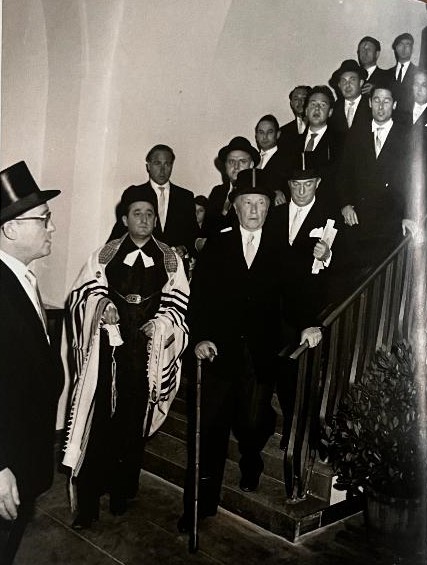
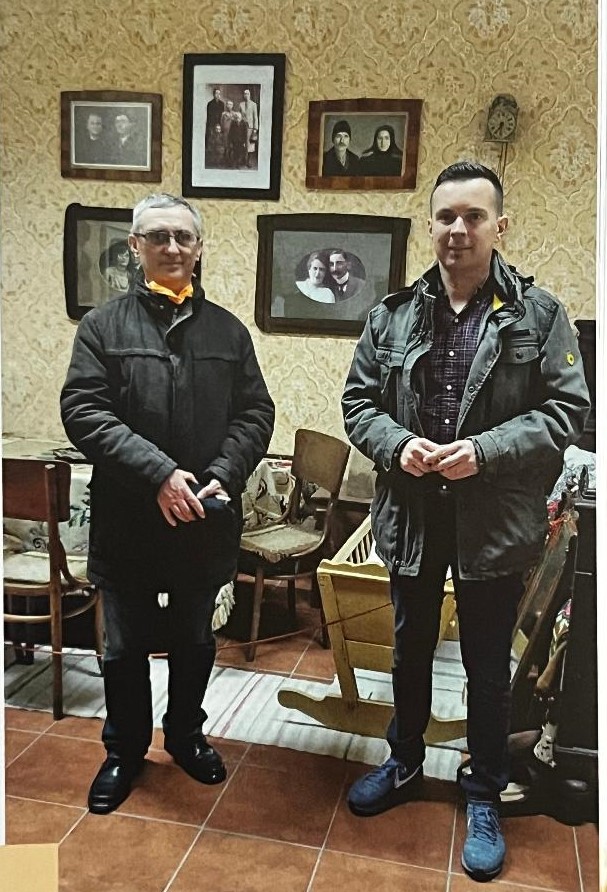
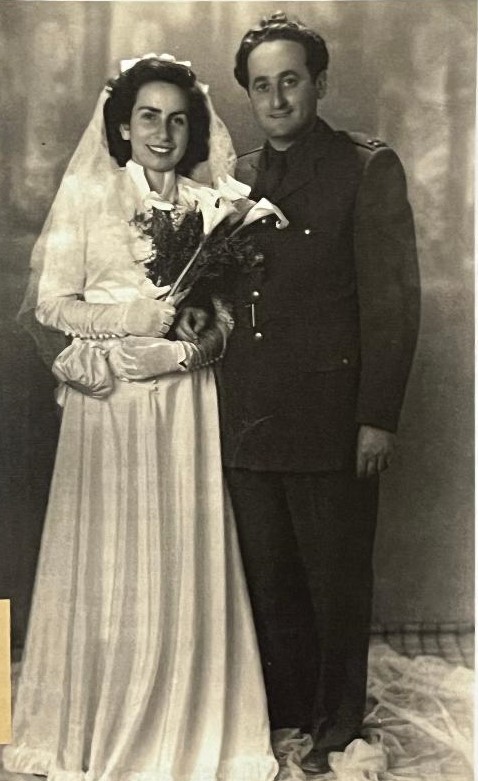
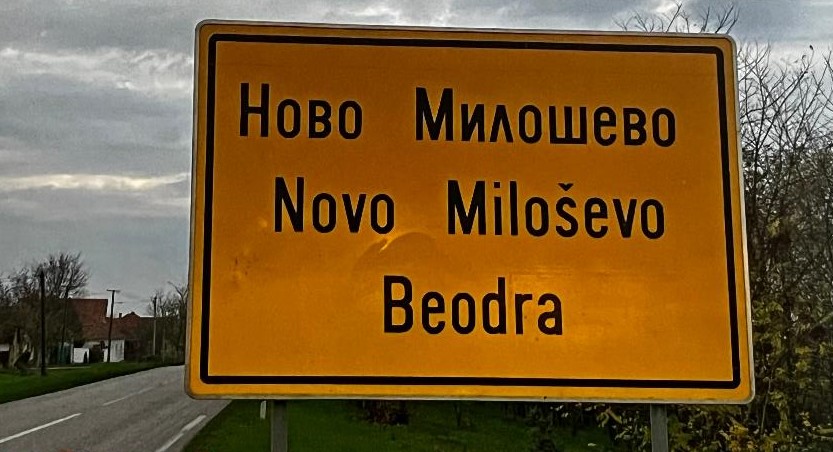
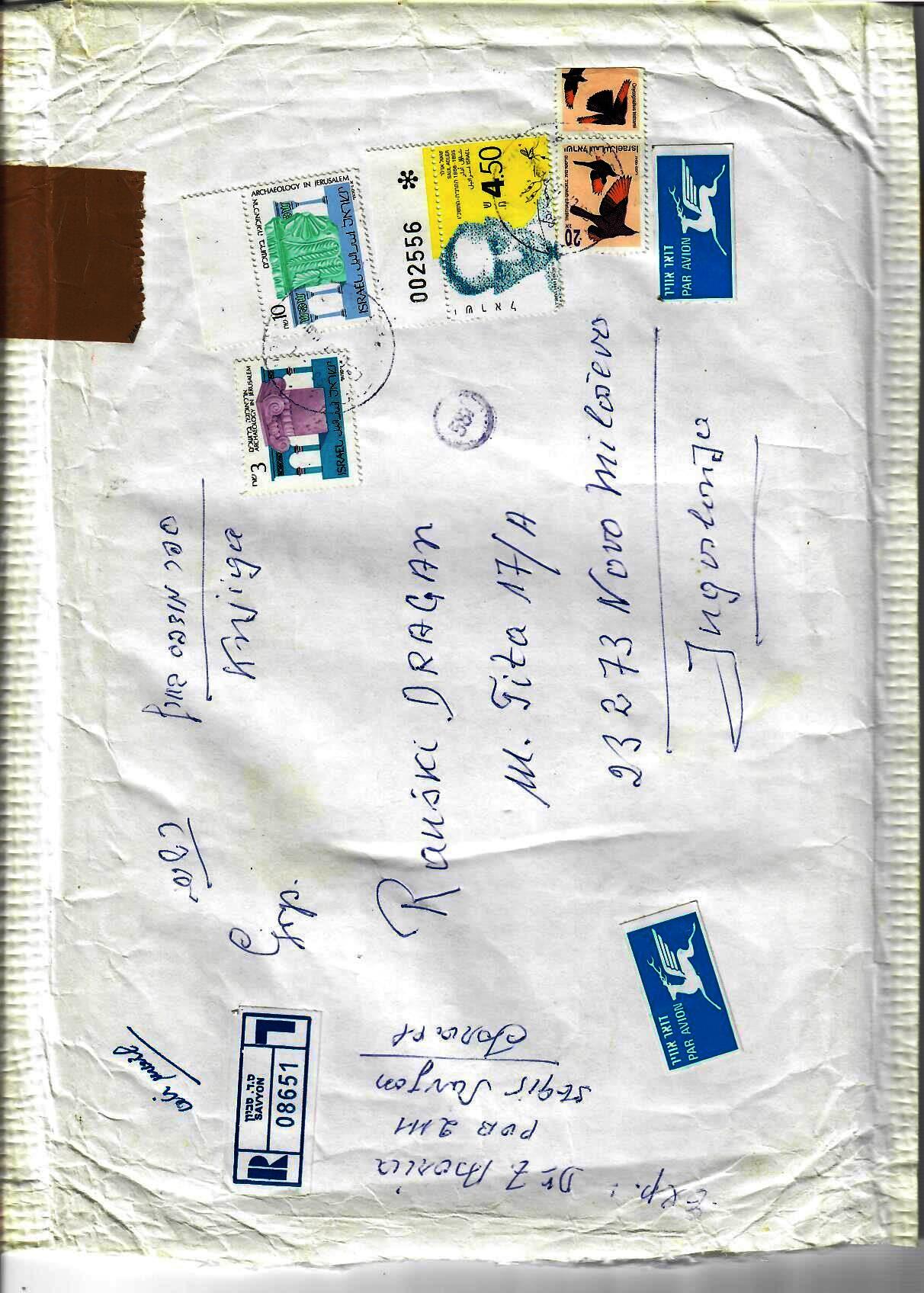
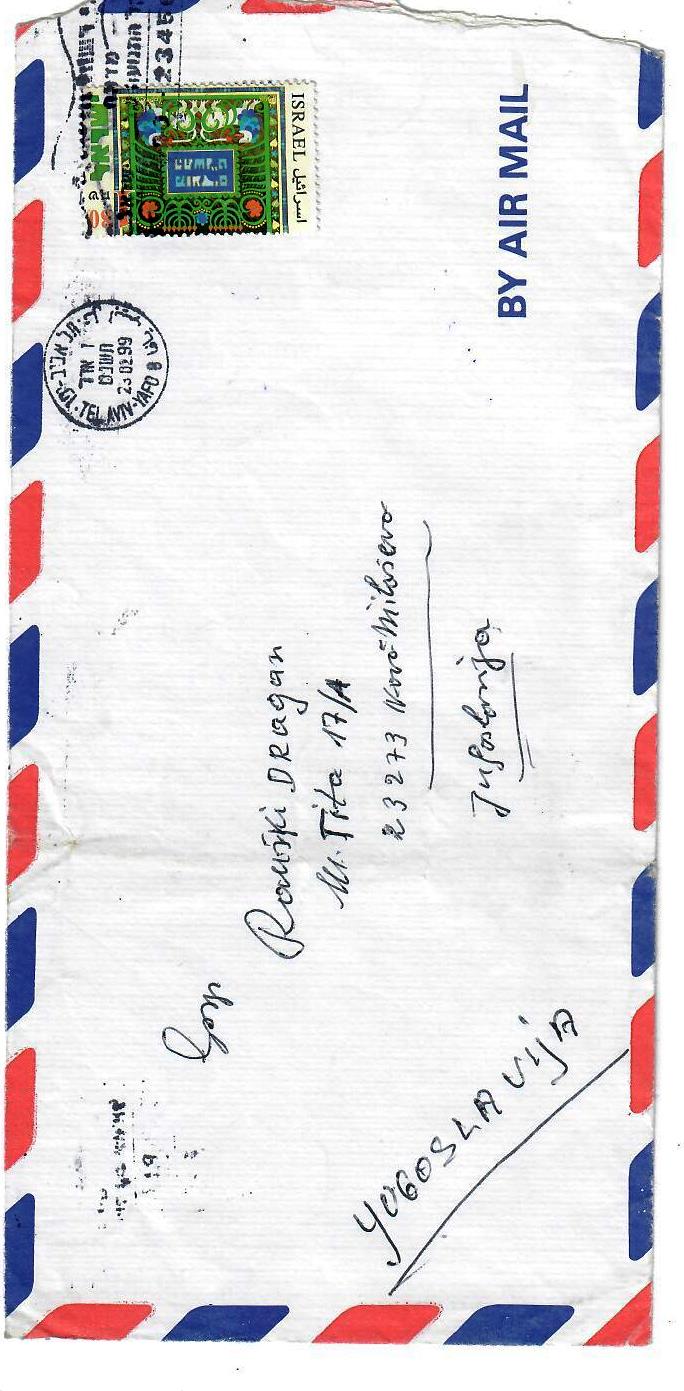
Rabbi Hermann Helfgott alias Zvi Asaria (1913 – 2002) is one of the best known prisoners of war of the Eversheide prison camp for officers. His versatile activities in the after-war period made a significant impact on German-Jewish life, a better understanding between Christians and Jews as well as German –Israeli relations. Helfgott compiled historical, auto-biographical and theological writings. In his memoires, entitled: ’We Are Witnesses’, published in 1975 in German language and based on his war journal, he writes about the life of a war prisoner. He spent more then two years incarcerated at the Osnabrück prisoner of war camp for officers, Oflag VI C. Hermann Helfgott / Zvi Asaria Born in 1913 in Beodra/Beudra (present-day, Novo Miloševo, Serbia) as Heerman Helfgott, son of Polish emigrants. In 1910/1911, his father Kalman was resettled from Warsaw to Beodra. In 1912, his mother Rosa and their two daughters Sama and Sara followed. In 1915, Hermann’s younger brother Avram was born. Kalman Gotthelf worked as a teacher, choirmaster and butscher. He also traded in goose feathers. From 1932 to 1934, Theology studies in Sarajevo; from 1934 to 1938 History and Judaism studies in Vienna. After the annexation of Austria, Helfgott fled to Budapest, where he graduated as rabbi and doctor in phylosophy. Rabbinate in Veliki Bečkerek (Great Bechkerek) – present-day Zrenjanin, Serbia. Leader of Jewish congregational service in German and Serbian language. Two months later, he was mobilized to Skopje in Macedonia, for military service. From there, he was transferred to Štip, just before the war started. Shortly after the start of the war in 1941, as a military priest and holding a rank of a captain of the royal Yugoslav army, he was taken prisoner of war by the Germans. In a marching formation, he was first deported to Rumania via Macedonia and Bulgaria and was from there on transported in cattle cars via Hungary to Nürnberg, Oflag (prisoner of war camp for officers) XIII B. A year later, he was transferred to the Oflag VI C in Osnabück, where he was detained for two years and three months. Odyssee through Germany: In August 1944, train transport of 400 Jewish prisoners of war from the camp to the Sovereign Bismarck fortress in Strassburg. Two weeks later, transfer to the prisoner of war camp Gross Born/Barkenbrügge in Pommern, present-day Poland. In January 1945, another deportation: 400 km long march on foot to Meyenburg (present-day Brandenburg). In March 1945, passing Osnabrück, train journey to Emslandlager camp, Alexisdorf. Few days later, another march in the east direction to Nienburg on the river Weser. Escape of a small group of prisoners near Hodenhagen. Liberation. In 1945, after liberation by British troops, he traveled to Bergen-Belsen in order to look for relatives in the camp there. That is where he stayed and started organizing religious and cultural life for the displaced persons (DP’s). August 1945: Together with rabbi Wilenski, consectration of the provisional synagogue at the former Jewisch school in Rolandstrasse in Osnabrück. February 1947: Appointed as representative of the Jewish World Congress in London, in educational, cultural and religious affairs. July 1947: Appointed as chief rabbi of the British-held zone of occupation. From 1948 – 1953 in Israel. In 1948, as a supporter of armed Zionism and ranking major, he faught in the Palestine war. With the Israeli citizenship, he adopted the name Zvi Asaria. In 1953 Asaria returned to Germany as chairman of the cultural department to the Israeli-Mission. Simultaneisly, he was congregational rabbi in Cologne until 1962. From around 1965, his time was shared between two congregations: Israeli Savjon and Lower Saxony in Germany. From 1966 until 1970: federal state rabbi of Lower Saxony. As such, he took part in 1969 consecration of the Osnabrück synagogue, in the Weststadt. Author of the commomorative volume. Source: Jewish Congregation Osnabrück After 1970, Helfgott finally returned to Israel, however he kept teaching occationally at German universities. On 22nd May 2002, he died in Savyon, Israel. His legacy is kept at the Yad-Vashem Archive in Jerusalem. From Hermann Helfgott’s memoires: ’Zvi Asaria: We Are Witnesses’ (Hannover 1975, unaltered publication from 1990) On 14th of May 1942, Helfgott and his fellow prisoners arrived at the Osnabrück prisoner of war camp. ’The prisoners got off the train at a small train station. The sign revealed that they had arrived in Eversheide – a small place near Osnabück. The pretty houses in the vicinity of the train station were surrounded with bloomig gardens. The gound was lined with a thick green cover. Women and children looked upon the prisoners unsympathetically […].’ Page 39 ’The Jews were arranged in the Barrack 33. Jews were also located in the opposite Barrack 34. Through the windows of the Barrack 34, Jewish prisonners watched the newcommers. Everyone was looking to see a familiar face. Friendly calls were audible from all sides. The number of Jews had reached 400.’ Page 39 In comparison to Nürnberg, Helfgott decribes the conditions at the camp as ’more humane’: 20 men in a room and one toilet per barrack. The food, however, was poor. The prisoners got organized: ’They studied English, Hebrew, Russian, Spanish, French, Italian and German. They organized courses for stenographers, veterinaries, engineers, lawyers, pharmacists and historians […]. They even established a ‘People’s college’, where presentations on science and culture were held.’ Page 40 Helfgott managed to obtain a prayer room and organize religious service for the 400 Jewish officers. He was even allowed to conduct funerals at the town’s Jewish cemetery. ‘The ‘Chevra Kadisha’ conducted ritual washing of the deceased. The German command permitted the religious ceremony and 30 men - 18 Jewish and 12 non-Jewish - officers set out into the town of Osnabück. […] After three hours, the prisoners reached the Jewish cemetery.’ Page 42 Different political fractions existed in the camp: royalists, nationalists, progressives, communist zionists, trotskyists – with changing alliances. ‘There were differences of opinion among the generals: should they hold allegiance to the exiled King in London or the combatant Yugoslav political representatives? […] General Popadić prohibited his generals from visiting the Jewish barracks. He threatened trotskyists in his order of the day.’ Page 50 On one occasion, as with untypical unanimity, the Jews cast a vote for a representative aligned with the progressives. The following morning signs wer displayed on some of the barracks saying ‘No entry for Jews’ and the prayer room was demolished. The Jews complained to the camp elder, who called for brotherhood and unity. Page 50-53 ‘The perpetrators remained undiscovered!’, Asaria wrote. ‘Even in the Jewish barracks, there were confrontations between those who created the zionist circle and the ‘progressives’. Page 54 Regardless of all the political and ideological division: News broadcasts from abroad, streamed by a secretly made radio receiver, were passed on to everyone in the camp. ‘News were now coming in not just from German sources, but also from a radio receiver, hand-crafted by one of the prisoners. They obtained parts for the radio from German guards, in return for cigarettes. The receiver was hidden in a loaf of bread. All the search efforts by the Germans remained fruitless. […] Before bedtime, one of the inmates used to go from group to group and spread the latest news.’ Page 58 In August 1944, 400 Jewish prisoners were taken to the train station, not knowing where they were being deported to. During the raid, Helfgott managed to save his journal. ‘His comrades helped him manufacture a forged stamp: Checked Oflag 13 B’ […] The rabbi succeeded in rescueing his notebooks. He claimed, they were funeral sermons. One of the Germans threw them away though, yet another slipped them back to him secretly.’ Page 67 Voices of Descendants and Contemporaries (Interviews: Dr Željko Dragić) From an interview with Nada Blam, daughter of Rafael Blam, taken on 18th November 2020 in Belgrade. In his memoires, Helfgott writes that Rafael Blam was also in the camps of Nürnberg, Osnabrück and Barkenbrügge. Blam was a famous Serbian jazz musician. His daughter, Nada Blam, recounts how the two became friends for life. In the 1990’s, when Helfgott came to visit in Yugoslavia on several occasions, he was guest at their family home. ’In the evenings, Hermann and my father spent hours together, discussing different issues. They often spoke of the time spent at the prisoner of war camps, as well as the time when my father went to visit Hermann in Hannover in the 1960’s.’ ’My father’s and Hermann’s friendship was very close and they both shared their love of Israel’, Nada Blam explains. They travelled to Israel several times together and the Blam family travelled along. Unlike my father, who had surviving relatives in Serbia, Helfgott initially decided to stay in Germany after the war, in order to support the German – Jewish life together. The reason why he decided not to return to his home country later on, had to do with the communist regime under Tito, Nada Blam explains. The same motive was quoted by other witnesses. From a conversation with Aleksandar Nećak, former Chairman of the Jewish Community in Serbia, that took place on 20th November 2020 in Belgrade. His uncle, Iso Nećak and his father Dušan Nećak were at the Osnabrück prison camp, Aleksandar Nećak told us in an old coffee house in central Belgrade. ‘I cannot say, how well my father Dušan knew Hermann, but my uncle knew him very well. My uncle Iso returned to Belgrade after liberation. Through his uncle and his own activities in the Jewish community, Aleksandar Nećak got to know Helfgott personally. Helfgott remained connected to his old homeland, he explains. However, since he was not welcome as a rabbi by the communist regime that was in power, he never considered settling down there: ‘They didn’t want to have any rabbis and he didn’t want to live and work as a civilian.’ According to his uncle, Helfgott was a ‘moral authority’ in the camp. ‘Hermann was well respected even by those, who now believed in the communist era in Yugoslavia, like the famous Serbian writer Stanislav Vinaver’, his uncle told him. Helfgott was not only a rabbi, but also a psychologist and sometimes even a ‘big brother’’. His uncle admired Helfgott - whose family perished in concentration camps – for the very reason that ‘despite his personal tragedy, he tried to build bridges between Christians and Jews, Germans and Serbs.’ Personally, his uncle could not stay in the country of the perpetrators. Nećak emphasized how important it was for him to keep the memory of the camp alive: ‘It is very important for me, that after 80 years we continue to keep memory of my father, Hermann Helfgott and all other officers of the Osnabrück camp. The reason for that is that they were prisoners. For weeks and months, they had no knowledge of what had happened to their wives and children’. From a conversation with Dragan Rauški, local historian and former neighbour of Hermann Helfgott in Beudra/Beodra, conducted at the Museum of Local History, Novo Miloševo, on 17th November 2020 Dragan Rauški’s family were direct neighbours of the Helfgott family in Beodra/Beudra, present-day Novo Miloševo. Rauški is in charge of the ’Kotarka’ Museum of Local History there. The name ’Kotarka’ - corn granary in Serbian language – describes the building’s former function.’ You are the first people who arrived from abroad to do research on Hermann Helfgott’, was his cherrful reaction at the start of our conversation, which took place at the Museum. He remembers that Helfgotts parents moved to Banat, which at the time belonged to the Austo-Hungarian Empire. Just like the entire northern part of Serbia, people of the local community were very mixed at the time: ’Serbs, Hungarians, Volkgermans and Jews. This included those who considered themselves Jews, based on their ethnicity and those, who defined their Jewish identity solely based on religion. The majority of the population were Serbs and Hungarians’, Rauški explaines. The Helfgott family lived in the congregation house of the synagogue, since the Helfgott father, Kalman, worked as a cantor there. Rauški tells, that he remained in contact with Hermann Helfgott until his death. He reports that the entire Helfgott family was murdered in Auschwitz and in the Croatian (Ustaša) Jasenovac concentraton camps. That was the reason why he did not return to Yugoslavia straight after the war ended. Later on, Hermann did intend to return. However, he was prevented from doing so by the communist government, who refused to allow him to work as a rabbi. Helfgott expressed his wish to Rauški, for the Osnabrück camp to become a museum. From Dragan Rauški’s monograph on Novo Miloševo Dragan Rauški (Hg): Essays for the Novo Miloševo monograph: book 7. Banat Cultural Centre, Novo Miloševo 2016 pages 72-84. As a local historian, Dragan Rauški published a monograph on his hometown Novo MIloševo. In the seventh volume of the book, published in 2016, there is a biographical portrait of Hermann Helfgott, which takes up his memories as a camp prisoner. The descriptions were based on the biographical lexicon: ‘Jews of Serbia’ (Belgrade, 2011) and information from the Yad-Vashem Archive. Apart from the well-known information and accounts, given by Helfgott himself in ‘We Are Witnesses’, the description includes additional details: such as the names of certain travel companions. In several parts, it also complements Helfgott’s own accounts on the life in the camp. For example, a ‘group of Serbian officers’ was allegedly responsible for the devastation of the camp synagogue. The atmosphere in the camp depended on the repsective guard commander: With tollerant commanders in charge, life with certain small privileges was bareable. With the opposite, there was always a risk of aggravation and torture.’ Helfgott too, experienced such torment: ‘The commander was riding a bicycle, and Helfgott had to run after him the whole time’. The fact that the Jews were not entirely in the position to practice their religion undisturbed, is apparent from the description of an investigation: In the matters discussing the permition to conduct prayers and teachings in Hebrew language, there were references to Rabbi Helfgott ‘ending up as raw material for soap’. From then on, no public prayers or teachings were conducted. Helfgott’s barrack was hit during the bombardment of a nearby German air defence post. At the time, the rabbi was visiting a friend in another barrack. When he returned, he found a bomb crater where his bed used to be. All of his room mates had been killed in the attack. Langenhagen, 15. 02.2021 Dr. Zeljko Dragic